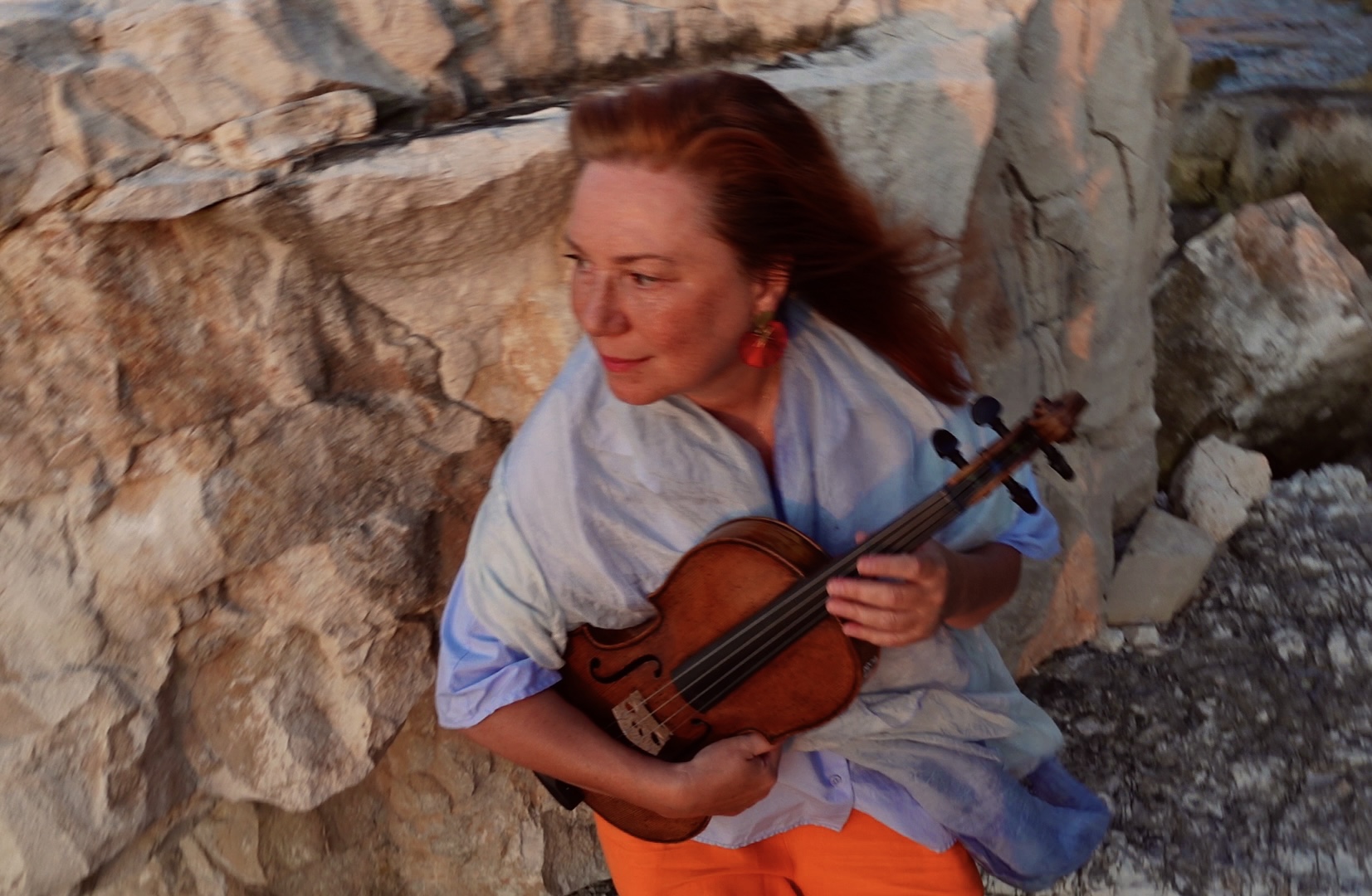
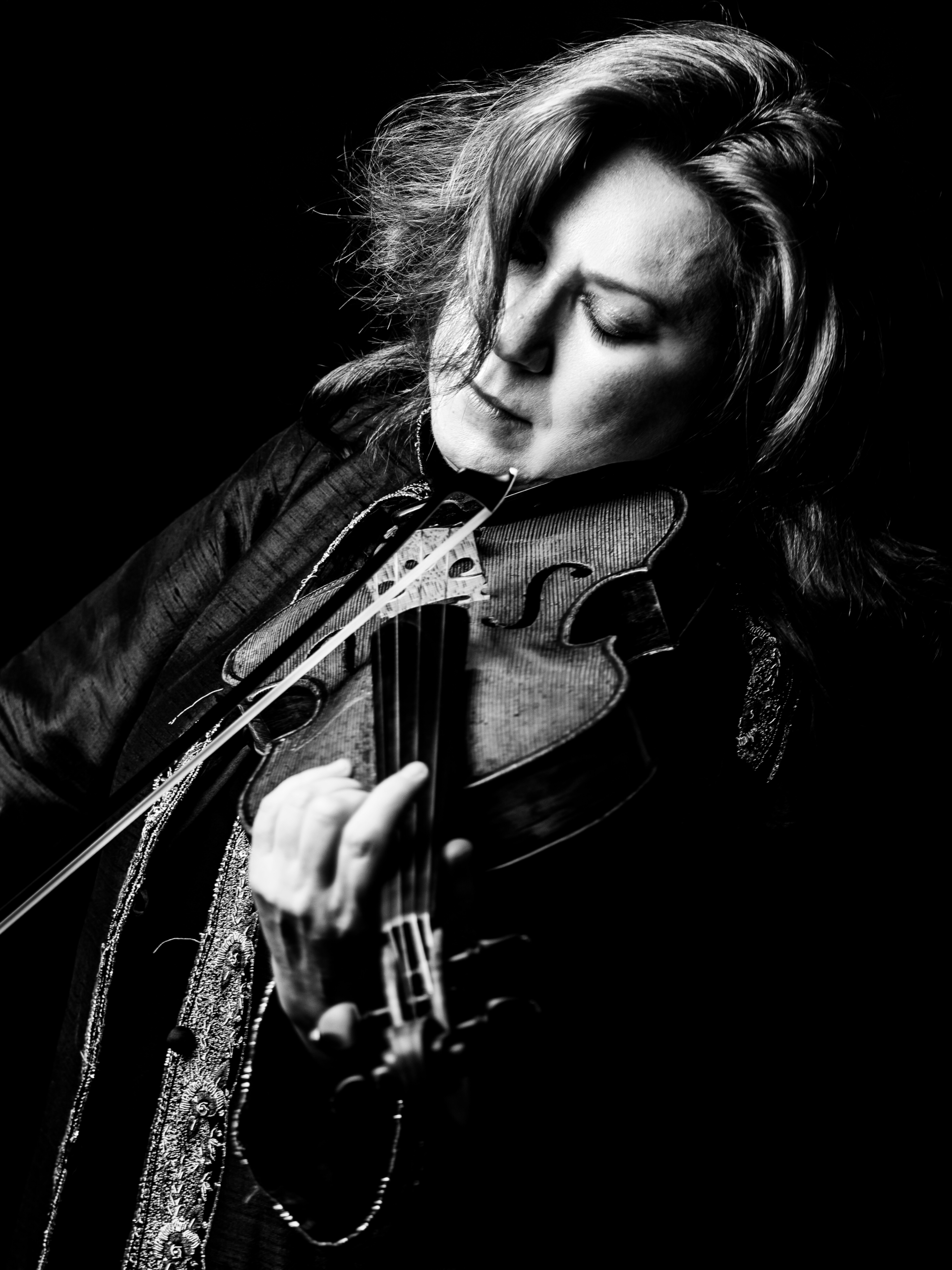
The radically free and untamed vitality of music is central to understanding the singing breath and the fiery, uncompromising nature of Tatjana Masurenko’s art. The violist’s poetic interpretations arise from a profound knowledge and unwavering dedication to the substance of the works in her broad repertoire and unfold in performance with a deeply immersive intensity. With her compelling stage presence, bold creativity, and vivid imagination born of deep clarity, Tatjana Masurenko is one of the leading violists of our time and has profoundly shaped the perception of the viola as a solo instrument. Her repertoire spans the central works for viola as well as new and rarely performed music, which she interprets through her distinctively breathing tone and a deeply personal approach that is at the same time firmly rooted in a rich musical tradition.
A central element of Tatjana Masurenko’s artistic life is the vibrant exchange between different musical cultures. For many years, she has worked closely with musicians and composers from various regions and has engaged intensively with traditional musical languages, particularly those of Turkey, Greece, and Central Asia. For her, these encounters are a natural part of musical practice: a serious engagement with each tradition, its ideas of sound, and its history, from which new artistic perspectives arise.
The viola d’amore plays a major role in this, as a historical instrument whose mystical voice opens a resonant space between worlds. Tatjana Masurenko combines historical performance practice with contemporary thinking on this instrument, initiating new works that emerge from traditional roots and bring them to life in a new light.
Growing up in a family of Russian academics and jazz musicians with a culturally diverse heritage, she was surrounded by an artistically vibrant environment from an early age. Born in Dushanbe, Tajikistan, she spent her childhood there before moving to St. Petersburg at the age of eleven, where she continued her musical journey and received a formative artistic education at the St. Petersburg School.
She later continued her studies in Germany with Kim Kashkashian and Nobuko Imai. In her search for new forms of expression, new techniques, and new ideas about sound, her friendships with Boris Pergamenschikow, György Kurtág, Brigitte Fassbaender, and Herbert Blomstedt have had a lasting influence on her.
As a soloist, Tatjana Masurenko performs with renowned orchestras such as the Leipzig Gewandhaus Orchestra, the Berlin Radio Symphony Orchestra, and the NDR Radiophilharmonie, as well as other leading orchestras in Europe and Asia. For decades, she has been a valued guest at major international festivals, both as a soloist and as a chamber musician.
The further development of the viola as a solo instrument is an essential part of Tatjana Masurenko’s artistic work. Her ongoing commitment to contemporary music is also part of this. She has premiered numerous new works, many of which are dedicated to her and were commissioned on her initiative. Her close collaboration and long-standing artistic dialogue with composers have resulted in compositions that open up new tonal, technical, and expressive possibilities for the viola. These include works by Gladys Krenek, Moritz von Gagern, Dimitri Terzakis, Wolfgang Rihm, Hans-Christian Bartel, Luca Lombardi, and Nejat Başeğmezler.
Tatjana Masurenko’s discography reflects the consistency and artistic depth of her work. A central reference point is the three-part recording “White Nights – Music from St. Petersburg,” recorded with pianist Roglit Ishay, which is one of the most important recordings of this repertoire. In 2017, the CD “Nur ein Bewegen der Lüfte” (Just a Movement on the Air) was released, featuring works by Ernst Krenek and Robert Schumann. This recording combines her affinity for the music of Ernst Krenek, whose works for solo viola she has recorded in their entirety, with her profound knowledge of historical performance practice, particularly the playing style of the 19th and early 20th centuries. Tatjana Masurenko also supports the Ernst Krenek Institute in Krems (Austria).
Several of her recordings have received international awards, including the concerto by K. A. Hartmann and British Viola Concertos with works by Walton, Beamish, and Britten, which were awarded the German Record Critics’ Prize, the Supersonic Award (Luxembourg), and the Diapason découverte (France).
The CD “Dances of Light,” released in 2023 and recorded with the Yaruss Quartet, sets its own accent. In this extraordinary collaboration, solo viola and traditional folk instruments combine to create new arrangements of popular works of Russian Romanticism as well as contemporary compositions written especially for this formation. Musicians from various former Soviet republics contribute their respective cultural backgrounds and cloak this rich musical heritage in a new, contemporary guise.
Tatjana Masurenko is deeply committed to promoting young musical talent. Since June 2022, she has been Professor of Viola and Chamber Music (Richard Colburn Viola Chair) at the Colburn Conservatory of Music in Los Angeles, where she currently teaches.
Previously, she was professor of viola at the Hochschule für Musik und Theater „Felix Mendelssohn Bartholdy“ in Leipzig from 2002 to 2022 and has held the same position at the Haute École de Musique de Lausanne in Sion (Switzerland) since 2019.
She regularly gives international masterclasses in Europe, North America, and Asia, among other places, and is artistic director of the International Viola Camp in Iznik, Turkey, as well as an international masterclass series in Leipzig.
Many of her students have gone on to successful international careers as soloists, professors, principal violists in major orchestras, and chamber musicians.
Her teaching style is based on the St. Petersburg tradition of the 19th and early 20th centuries and blends with the new ideas and sensibilities of the 20th/21st centuries, especially in the interpretation of Baroque and Classical music.
Tatjana Masurenko plays a viola by P. Testore (Milan, 1756) and uses bows selected according to the stylistic direction.